TL;DR (Too Long; Didn’t Read)
Getting into birding doesn’t need to be expensive. You can start with just your eyes and a free bird ID app, then move up to binoculars and a field guide, and eventually add a spotting scope if the hobby sticks. How much you invest is personal—start small if you’re unsure, or go big if you know birding is for you. Whatever you choose, look for great warranties on entry-level optics and don’t forget the practical essentials like water, sunscreen, and bug spray.
Getting Started in Birding
Birding is one of those hobbies that meets you wherever you’re at. You can enjoy it casually from your backyard or dive deep into the details with high-end optics and meticulous record-keeping. What matters most is that it gets you outside, paying attention to the natural world. Here’s a look at the different gear setups new birders might consider:
1. The Budget-Friendly Start: Naked Eye + Merlin Bird ID App
The simplest way to begin is just to look and listen. With nothing but your naked eye and the free Merlin Bird ID App, you can start putting names to the birds around you. Merlin even offers sound ID, which is incredibly helpful for beginners. This is a zero-cost, zero-risk way to test the waters.
2. The Classic Setup: Binoculars + Field Guide
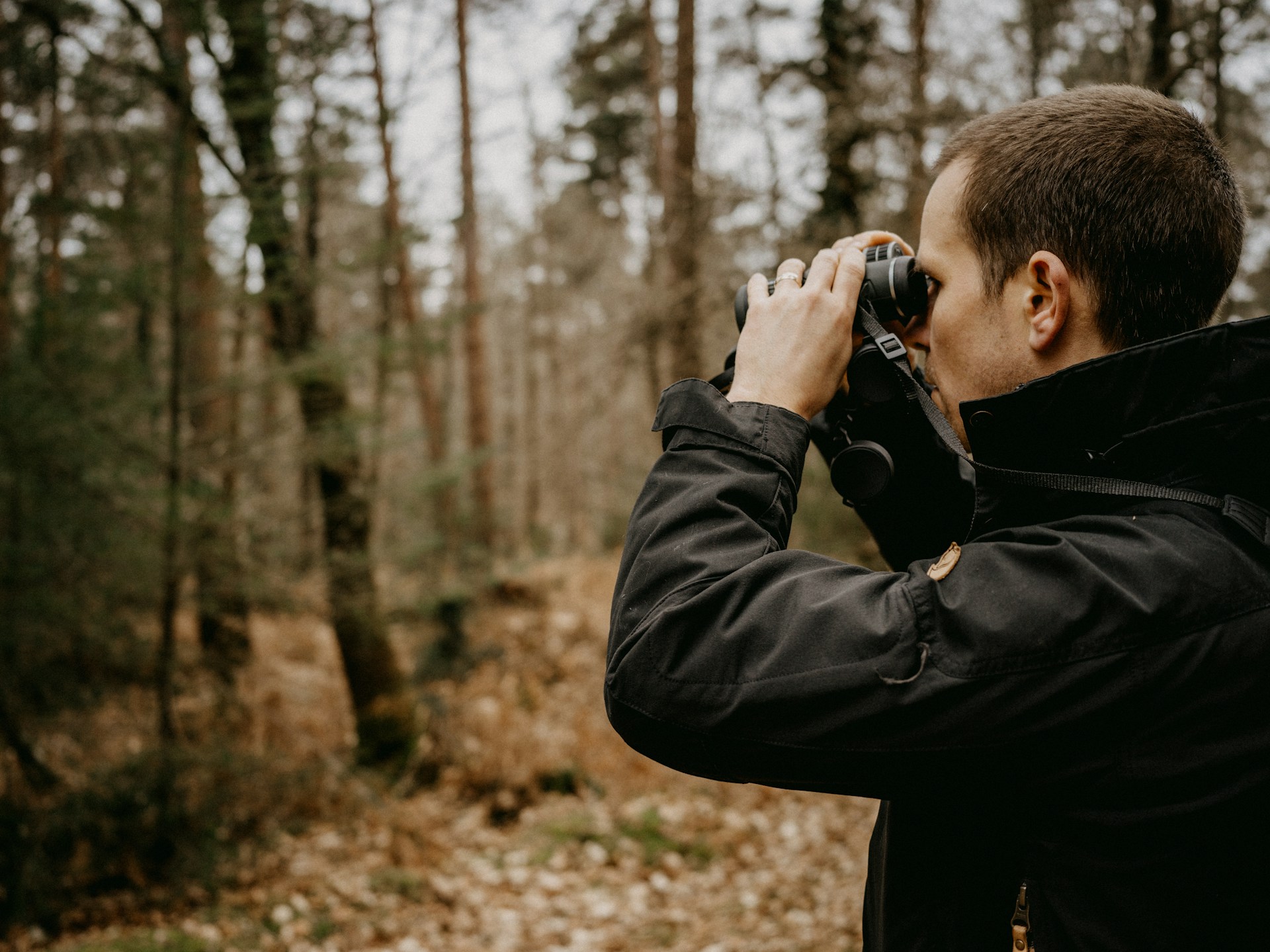
Binoculars are the single piece of gear that transforms birding. They reveal the fine details—plumage, patterns, and behaviors—that make identification possible. (Not sure which ones to pick? Check out our Binoculars 101 guide). Pair them with a field guide (digital or print), and you’ll be amazed at how much more rewarding your birding outings become.
3. The Serious Birder’s Kit: Binoculars + Spotting Scope + Field Guide
For those who know they’re committed, adding a spotting scope opens up a new level of detail. Scopes shine when watching distant shorebirds, waterfowl, and raptors, giving you a front-row seat from far away. With a good set of binoculars, a scope, and a field guide, you’ll have everything you need to take your birding anywhere.
How Much Should You Invest?
Your budget depends on your level of commitment:
- If you’re just testing out the hobby, it’s smart to keep things simple and affordable.
- If birding is likely to fit right in with your other outdoor passions, you might prefer the “buy once, cry once” approach, investing in gear that will serve you well long-term.
💡 Team Tip: Unless you’re starting with higher-quality glass ($500+), choose optics backed by an excellent warranty. Brands like Vortex and Athlon offer no-fault lifetime coverage, so when you eventually upgrade, you can lend your starter gear to friends without worrying about who’s responsible for repairs.
Checklists: To Track or Not to Track?
Another choice birders face is whether to keep a checklist. For some, the joy is in simply watching and appreciating. For others, tracking sightings is half the fun. Some keep a life list—every bird they’ve ever seen.
- Others track when and where each bird was spotted.
- Some prefer to stay in the moment and skip lists altogether.
Digital tools like eBird make it easy to log sightings and contribute to citizen science, while traditionalists may enjoy paper checklists or durable Rite in the Rain notebooks. We didn’t include checklists as “essential gear” because they’re a matter of personal preference—it’s up to you how (or if) you want to keep track.
Must-Haves for Every Birder (No Matter the Gear)
No matter your level of interest or budget, a few basics will always make your outings safer and more enjoyable: [ ] Rain jacket or poncho – weather can change quickly [ ] Comfortable shoes – you’ll be walking and standing a lot [ ] Hat, sunscreen, and sunglasses – for sun protection [ ] Bug spray & long pants – especially important in tick or mosquito country [ ] Water & snacks – birding can keep you out longer than you expect [ ] Notebook & pen – for jotting down field notes, even if it’s not a formal checklist
Final Thoughts
Birding can be as simple or as gear-intensive as you want it to be. Start where you’re comfortable, bring the essentials, and most importantly—get outside and enjoy the birds. Whether you’re armed with just your eyes and an app or decked out with top-tier optics, every birder shares the same joy: the thrill of spotting something wild and wonderful.