TL;DR
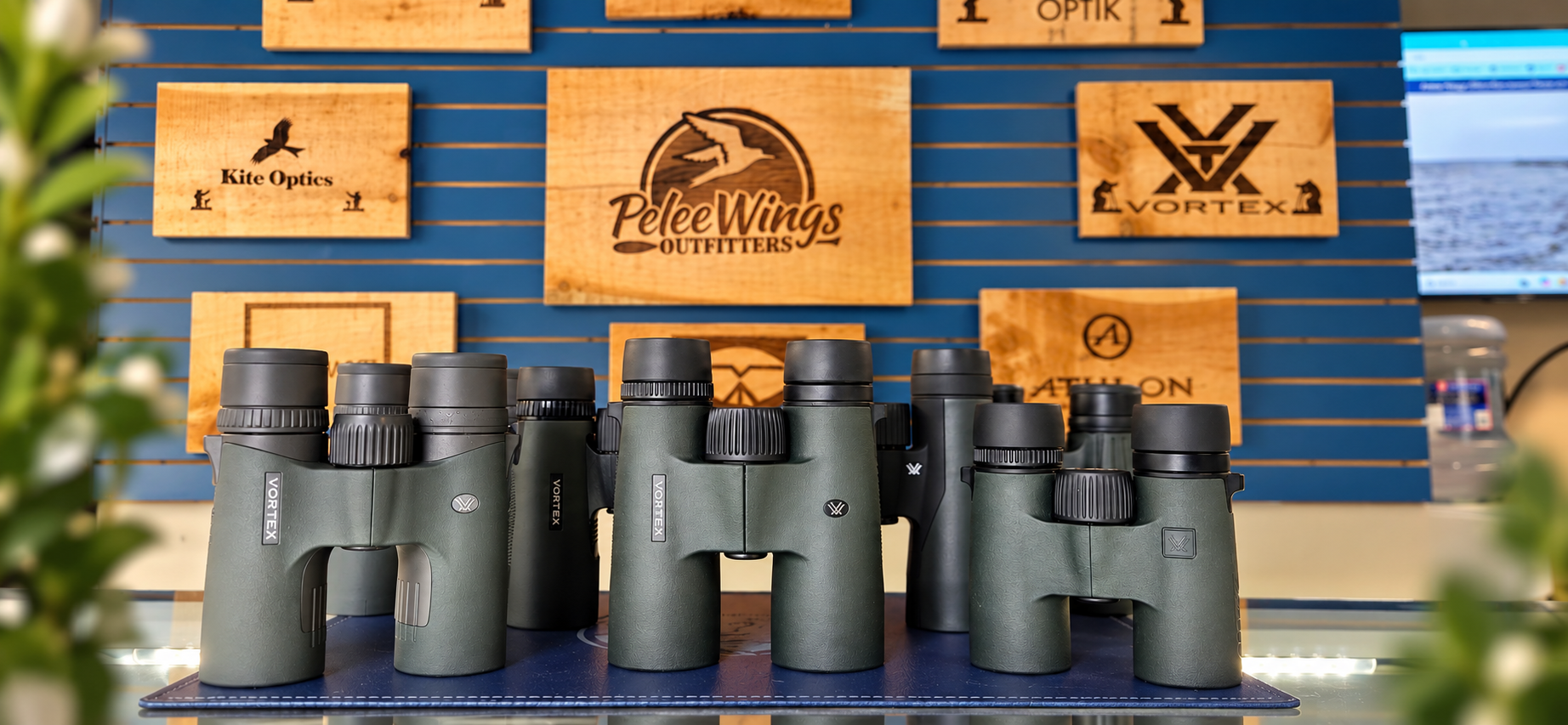
Vortex has a wide binocular lineup, ranging from compact, affordable options to premium glass built for serious birders, hunters, and outdoor observers.
For this comparison, we focus mainly on the 8x42 models where available, because 8x42 is one of the most useful all-around formats for birding, hunting, and general nature observation.
Here’s the simple breakdown:
- Bantam HD is a compact, affordable option that makes sense as a first binocular, spare pair, vehicle binocular, camp binocular, or easy-to-carry backup.
- Triumph HD is a budget-friendly full-size binocular for people who want simple, practical performance without spending much.
- Crossfire HD is the entry-level workhorse and a strong place to start for regular outdoor use.
- Diamondback HD is one of the best value points in the Vortex lineup and often the easiest recommendation for many users.
- Viper HD is the serious step up, with better optical refinement, coatings, build quality, and overall feel.
- Razor HD moves into premium performance with a cleaner, more refined optical system.
- Razor UHD is the top of the Vortex binocular lineup, built for people who prioritize maximum optical performance.
Other formats are available in many of these model lines. We do not carry every single version, not because the others are bad, but because after considering our own testing and customer feedback, some configurations simply have not found a permanent home in our lineup.
Why Compare the Vortex Binocular Lineup?
One of the strengths of Vortex is also what can make the lineup confusing.
There are a lot of choices.
That is great when you know exactly what you are looking for. It is less helpful when you are staring at model names like Crossfire, Diamondback, Viper, Razor, and Razor UHD, trying to figure out what actually changes as you move up the ladder.
The truth is, every model has a place.
The right binocular depends on what you need it to do, how often you use it, how much optical performance you expect, and how much you want to spend. A casual user does not automatically need a Razor UHD. A serious birder may quickly outgrow an entry-level binocular. A hunter glassing at dawn and dusk may care more about low-light performance than someone keeping a spare pair in the truck.
The goal here is not to declare one winner.
The goal is to explain where each Vortex binocular line fits, what formats are available, and how the 8x42 models compare where that size exists.
A Quick Note on 8x42 Binoculars
For birding, hunting, and general outdoor use, 8x42 is one of the most versatile binocular formats available.
The 8x magnification is easier for most people to hold steady than 10x or 12x, while the 42 mm objective lens gives a bright, comfortable view without making the binocular overly large.
That makes 8x42 a strong choice for:
- birding
- hiking
- hunting in mixed terrain
- backyard nature watching
- travel
- general wildlife observation
- long periods of handheld use
Not every model in the Vortex lineup is available as an 8x42, so where it is not available, we explain the closest role that model plays instead.
Build, Frame Materials, and Lens Coatings: What Actually Changes?
When comparing binoculars, it is easy to focus only on magnification, field of view, and price. Those things matter, but construction and coatings are a big part of why one binocular feels brighter, sharper, tougher, or more refined than another.
Most of the binoculars in this Vortex lineup use a roof prism design. Roof prism binoculars are compact, durable, and easy to carry, which is why they have become so popular for birding, hunting, and general outdoor use.
As you move up through the lineup, you start to see changes in coatings, prism treatments, chassis materials, and protective features.
Lens Coatings
Lens coatings are thin treatments applied to glass surfaces inside the binocular. Their main job is to reduce reflections and increase light transmission. Better coatings usually mean a brighter, clearer image with better contrast, especially in more challenging light.
In this lineup, you will see terms like:
Fully multi-coated lenses
This means multiple anti-reflective coatings are applied to the air-to-glass surfaces. These coatings help improve light transmission and reduce glare compared with simpler coated optics.
XR fully multi-coated lenses
These are upgraded proprietary Vortex coatings designed to increase light transmission and improve overall image quality.
XR Plus fully multi-coated lenses
These are used higher in the lineup and are designed for maximum brightness and higher-end optical performance.
In plain language, coatings help more light get through the binocular and less light bounce around inside it. That usually means better brightness, contrast, and clarity.
Prism Coatings
Roof prism binoculars also rely heavily on prism coatings.
Dielectric prism coatings help produce a brighter, clearer, more colour-accurate image.
Phase correction coatings improve resolution and contrast by correcting phase shift that occurs in roof prism designs. That helps the image look sharper and more detailed.
These coatings are one of the reasons the Diamondback HD, Viper HD, Razor HD, and Razor UHD feel more refined than simpler entry-level options.
Exterior Lens Protection
Several Vortex models include ArmorTek, an ultra-hard exterior lens coating that helps protect exposed lens surfaces from scratches, oil, and dirt.
That does not mean the lenses are indestructible or that cleaning care no longer matters. It simply adds another layer of protection for real-world outdoor use.
Frame and Body Construction
All of these models are built for outdoor use, with rubber armour for grip and protection, along with waterproof and fogproof construction.
The higher-end models start to separate themselves in body construction. The Razor HD and Razor UHD use a magnesium chassis, which helps provide strength while keeping weight as controlled as possible.
Not every model has a published chassis material listed, so we do not assume one where it is not clearly stated. Instead, we look at the full package: optical system, coatings, durability features, feel in hand, and how the binocular performs during actual use.
Build and Coating Comparison
XR lens coatings
Not listed the same way as higher models
Not listed
Compact, lightweight, rubber-armoured, waterproof/fogproof design, aluminum frame
Fully multi-coated lenses
Not listed
Not listed
Roof prism design, rubber armour, waterproof/fogproof construction, polycarbonate polymer frame
Fully multi-coated lenses
Not listed
Not listed
Roof prism design, rubber armour, waterproof/fogproof construction, polycarbonate polymer frame
Fully multi-coated lenses
Dielectric prism coatings, phase correction
ArmorTek
Roof prism design, rubber armour, waterproof/fogproof construction, Magnesium Alloy frame
Viper HD
XR fully multi-coated lenses
Dielectric prism coatings, phase correction
ArmorTek
Rubber armour, waterproof/fogproof construction, locking diopter, polycarbonate polymer frame
XR Plus fully multi-coated lenses
Dielectric prism coatings, phase correction
ArmorTek
APO optical system, magnesium chassis, true open-hinge design, Magnesium Alloy frame
XR Plus lens coatings
Dielectric prism coatings, phase correction
ArmorTek
UHD optical system, magnesium chassis, Abbe-Koenig prism design, Magnesium Alloy frame
The short version is this: as you move up the Vortex lineup, you are not just paying for a different name on the binocular. You are usually getting better coatings, better optical correction, improved construction, more refined handling, and a view that holds together better in challenging conditions.
That does not mean everyone needs the top model.
It means the higher-end models are built to solve problems that become more noticeable the more time you spend behind binoculars.
Vortex Bantam HD
The Bantam HD sits in its own category within the Vortex lineup.
It is not a direct competitor to full-size 8x42 models like the Crossfire HD, Diamondback HD, Viper HD, or Razor HD. Instead, it is a compact, affordable binocular that makes a lot of sense for someone looking for an easy-to-carry pair at an entry-level price point.
The Bantam HD is available as a:
- 6.5x32
That lower magnification gives it a wide, steady, relaxed view. It is not designed to pull distant detail the same way a 10x42 or 12x50 would, but that is not really the point. The strength of the Bantam HD is that it is simple, compact, lightweight, and easy to keep close by.
This is the kind of binocular that makes sense as:
- a first pair of binoculars
- a compact spare
- a vehicle or camp binocular
- a loaner pair for friends or family
- a lightweight option for casual outdoor use
- a simple backup pair for travel or field use
At 14.4 oz, the Bantam HD is much lighter than the full-size binoculars in this comparison. It also offers a 400 ft field of view at 1,000 yards, which is generous for a small, affordable binocular.
The Bantam HD also uses XR lens coatings, which is a nice feature at this level. Those coatings help improve light transmission and keep the view clearer than many people might expect from a compact, affordable binocular.
If you are looking for maximum optical performance, this is not where the Vortex lineup peaks. But if you want something compact, affordable, and useful to have on hand, the Bantam HD makes a lot of sense.
Vortex Triumph HD
The Triumph HD is the budget-friendly full-size option in this group.
Unlike the other main 42 mm models in this comparison, we are not comparing an 8x42 version here because Vortex does not offer a Triumph HD 8x42. The main full-size version we focused on is the 10x42.
Available Triumph HD formats include:
- 10x28
- 10x42
- 12x50
The Triumph HD 10x42 gives users a rugged roof prism binocular with HD optics, fully multi-coated lenses, waterproofing, fogproofing, shockproofing, and a harness package.
Where it fits best is straightforward: it is for people who want a usable, full-size binocular at a very approachable price.
The trade-off is that it is not as refined as the higher models in the lineup. The 10x42 has a 334 ft field of view at 1,000 yards and a 15.3 ft close focus, so it is not as forgiving up close as models like Crossfire HD or Diamondback HD.
That matters if you enjoy watching feeder birds, insects, butterflies, flowers, or close wildlife.
Best fit:
- budget-conscious users
- casual birding and wildlife watching
- hunting camp or truck use
- occasional outdoor use
- anyone wanting full-size binoculars without overbuying
The Triumph HD uses fully multi-coated lenses, which help increase light transmission and improve clarity compared with simpler coated optics. It also has rubber armour, waterproofing, fogproofing, and a roof prism design, giving it a practical full-size build at an approachable price.
It does not add the same listed higher-end prism coatings and exterior lens protection found farther up the lineup, but that is part of how it stays in the budget-friendly category.
The Triumph HD is not trying to be a Viper HD or Razor HD. It is meant to be simple, practical, and affordable.
Vortex Crossfire HD
The Crossfire HD is where the Vortex lineup starts to feel like a regular-use binocular for a lot of people.
Available Crossfire HD formats include:
For this comparison, the Crossfire HD 8x42 is the model we focus on.
The Crossfire HD 8x42 has:
- 393 ft field of view at 1,000 yards
- 17 mm eye relief
- 6 ft close focus
- 23.8 oz weight
- HD optical system
- fully multi-coated lenses
- waterproof, fogproof, and shockproof construction
This is a strong entry-level choice for people who expect to use their binoculars regularly but still want to stay budget-conscious.
Compared with the Triumph HD 10x42, the Crossfire HD 8x42 gives a wider, steadier view and a much closer focus distance. That makes it more comfortable for birding and general nature observation.
The Crossfire HD uses fully multi-coated lenses and Vortex’s HD optical system. It also has rubber armour, waterproofing, and fogproofing, which makes it a dependable entry-level option for regular outdoor use.
Compared with the Diamondback HD, the Crossfire HD does not add the same listed dielectric prism coatings, phase correction, or ArmorTek exterior lens protection. That is part of what separates the two lines.
The Crossfire HD is the kind of binocular we look at for:
- beginner birders
- casual hunters
- general outdoor users
- people upgrading from very basic binoculars
- anyone wanting an affordable 8x42
This is not the most refined binocular in the Vortex lineup, but it is a very practical starting point.
Vortex Diamondback HD
The Diamondback HD is probably the easiest Vortex binocular line for many people to understand.
It is still reasonably priced, but it gives a noticeable step up from the entry-level models. It is also available in a wide range of formats, which makes it useful for a lot of different customers.
Available Diamondback HD formats include:
For this comparison, we focus on the Diamondback HD 8x42.
The Diamondback HD 8x42 has:
- 393 ft field of view at 1,000 yards
- 17 mm eye relief
- 5 ft close focus
- 21.8 oz weight
- HD optical system
- fully multi-coated lenses
- dielectric prism coatings
- phase correction
- ArmorTek exterior lens protection
- waterproof, fogproof, and shockproof construction
The big thing with Diamondback HD is value.
It gives a good combination of optical performance, weight, close focus, warranty support, and price. That is why it is often one of the first binoculars we talk about with someone who wants a serious all-around option without getting into premium pricing.
Compared with the Crossfire HD 8x42, the Diamondback HD 8x42 is lighter, focuses closer, and adds dielectric prism coatings, phase correction, and ArmorTek.
In real use, those features help with brightness, colour accuracy, resolution, contrast, and durability. That is one reason the Diamondback HD often feels like such a strong value point in the lineup.
Best fit:
- birders wanting strong value
- hunters wanting a dependable all-around binocular
- nature watchers who care about close focus
- customers who want better performance than entry level
- people who want one binocular for many uses
The Diamondback HD line also includes other sizes, but not every configuration makes equal sense for our lineup. Some of those formats are useful for specific customers, while others overlap heavily with models we already prefer based on our testing and customer feedback.
That does not make those other versions bad. It just means we focus on the ones that make the most sense for our customers. There is a reason that the Diamondback HD 8x42 has been our top selling binocular for years!
Vortex Viper HD
The Viper HD is where the lineup takes a serious step up.
Available Viper HD formats include:
For this comparison, we focus on the Viper HD 8x42.
The Viper HD 8x42 has:
- 409 ft field of view at 1,000 yards
- 18 mm eye relief
- 6.5 ft close focus
- 24.5 oz weight
- HD lens elements
- XR fully multi-coated lenses
- dielectric prism coatings
- phase correction
- ArmorTek exterior lens protection
- locking diopter
- waterproof and fogproof construction
This is a noticeable upgrade over the Diamondback HD.
The view is more refined, the coatings are better, and the overall feel is more premium. The Viper HD also offers more eye relief than the Diamondback HD 8x42, which can matter for people who wear glasses.
The Viper HD moves into a more refined optical package with HD extra-low dispersion glass, XR fully multi-coated lenses, dielectric prism coatings, phase correction, and ArmorTek.
It also adds a locking diopter, which is a nice usability feature once the binocular is adjusted to your eyes. This is where the binocular starts to feel more serious, not just because of one spec, but because the whole package becomes more refined.
This is the binocular line we start looking at when someone uses optics often enough to appreciate the upgrade.
Best fit:
- serious birders
- regular hunters
- people who spend more time glassing
- users who want better coatings and refinement
- customers moving up from Diamondback HD
The Viper HD is not just “a more expensive Diamondback.” It feels like a more serious binocular. For many users, this is where the lineup starts to feel less entry-level and more long-term.
Vortex Razor HD
The Razor HD moves into premium territory.
Available Razor HD formats include:
For this comparison, we focus on the Razor HD 8x42.
The Razor HD 8x42 has:
- 388 ft field of view at 1,000 yards
- 17.5 mm eye relief
- 6 ft close focus
- 24.2 oz weight
- APO optical system
- premium HD extra-low dispersion glass
- XR Plus fully multi-coated lenses
- dielectric prism coatings
- phase correction
- Plasma Tech coating application
- magnesium chassis
- true open-hinge design
- waterproof and fogproof construction
This is where the conversation becomes more about optical refinement than simple value.
The Razor HD is designed for users who care about image quality, colour, contrast, and overall viewing comfort. It also stays reasonably manageable in size and weight compared with the Razor UHD.
Interestingly, the Razor HD 8x42 does not have the widest field of view in this comparison. The Viper HD 8x42 and Razor UHD 8x42 are wider on paper. But the Razor HD gives you a higher-end optical system, better glass, better coatings, and a more refined build.
The magnesium chassis helps keep the binocular strong without making it unnecessarily heavy, while the upgraded glass and coatings are aimed at better brightness, sharpness, colour, and contrast.
This is the point where optical refinement becomes the main reason to move up.
Best fit:
- experienced birders
- serious hunters
- users who glass often
- customers wanting premium performance without maximum bulk
- people who value optical refinement over simply chasing one spec
Razor HD is for the customer who has looked through enough binoculars to know that specs are only part of the story.
Vortex Razor UHD
The Razor UHD sits at the top of the Vortex binocular lineup.
Available Razor UHD formats include:
For this comparison, we focus on the Razor UHD 8x42.
The Razor UHD 8x42 has:
- 420 ft field of view at 1,000 yards
- 16.7 mm eye relief
- 4.5 ft close focus
- 32.4 oz weight
- UHD optical system
- XR Plus lens coatings
- dielectric prism coatings
- phase correction
- ArmorTek exterior lens protection
- magnesium chassis
- waterproof, fogproof, and shockproof construction
The Razor UHD 8x42 has the widest field of view among the 8x42 models in this comparison, and it also has the closest focus. It is built for people who want the highest level of optical performance Vortex offers.
The trade-off is weight.
At over 32 oz, the Razor UHD 8x42 is noticeably heavier than the Crossfire HD, Diamondback HD, Viper HD, and Razor HD 8x42 models. For some users, that is perfectly acceptable because the view is the priority. For others, especially people carrying binoculars all day, that extra weight matters.
The Razor UHD uses a UHD optical system, XR Plus coatings, dielectric prism coatings, phase correction, ArmorTek, an Abbe-Koenig prism design, and a magnesium chassis.
The purpose is clear: maximum optical performance. This is the model for users who are willing to carry a heavier binocular in exchange for the best view Vortex offers.
Best fit:
- serious birders who prioritize view quality
- hunters glassing in demanding conditions
- users who want the top of the Vortex lineup
- people who care about field of view and close focus
- customers who do not mind extra weight for better optics
The Razor UHD is not the right binocular for everyone. It is the right binocular for someone who wants the best Vortex has to offer and is willing to accept the extra size and weight that comes with it. An important note. The Razor UHD 42mm has left our cabinets and is no longer a staple in our lineup. The Razor UHD 32mm is however, a fan favourite here!
How We Would Break Down the Lineup
Here is the simplest way to think about the Vortex binocular lineup.
Bantam HD
Best for someone who wants a compact, affordable binocular at an entry-level price point. Great as a first pair, spare pair, vehicle binocular, camp binocular, or easy-to-carry backup.
Triumph HD
Best for someone who wants the lowest-cost full-size roof prism option in this group. Practical, simple, and affordable.
Crossfire HD
Best for someone who wants an entry-level binocular they can use regularly. A strong starting point for birding, hunting, and general outdoor use.
Diamondback HD
Best for someone who wants the value sweet spot. It gives a strong mix of performance, weight, close focus, warranty, and price.
Viper HD
Best for someone who wants a noticeable step up in optical quality and overall feel without jumping straight to Razor pricing.
Razor HD
Best for someone who wants premium optical performance in a still-manageable full-size binocular.
Razor UHD
Best for someone who wants the highest level of Vortex binocular performance and does not mind carrying a heavier binocular to get it.
Which One Should You Choose?
If you want an affordable compact binocular to keep handy, the Bantam HD makes a lot of sense.
If you want a simple full-size binocular at the lowest price point in this comparison, look at the Triumph HD.
If you want a proper entry-level 8x42, the Crossfire HD 8x42 is the better place to start.
If you want the best balance of value and performance for regular use, the Diamondback HD 8x42 is hard to ignore.
If you want a more refined image, better coatings, and a better overall feel, the Viper HD 8x42 is the next serious step.
If you want premium glass without going to the heaviest option, the Razor HD 8x42 deserves attention.
If you want the top Vortex experience and you are comfortable with the extra weight, the Razor UHD 8x42 is the flagship choice.
Final Thoughts
A good binocular lineup should not have one answer for everyone.
That is the point.
Different users need different things. Some people need compact and affordable. Some need light and versatile. Some need rugged and practical. Some want the clearest, brightest, most refined view they can get.
Vortex does a good job of giving people options across those categories.
Our job is to help narrow those options down to the ones that make the most sense in real use. That means looking beyond the model name, beyond the spec sheet, and beyond the idea that the most expensive binocular is automatically the right one.
The best binocular is the one that fits your eyes, your hands, your budget, and the way you actually spend time outdoors.