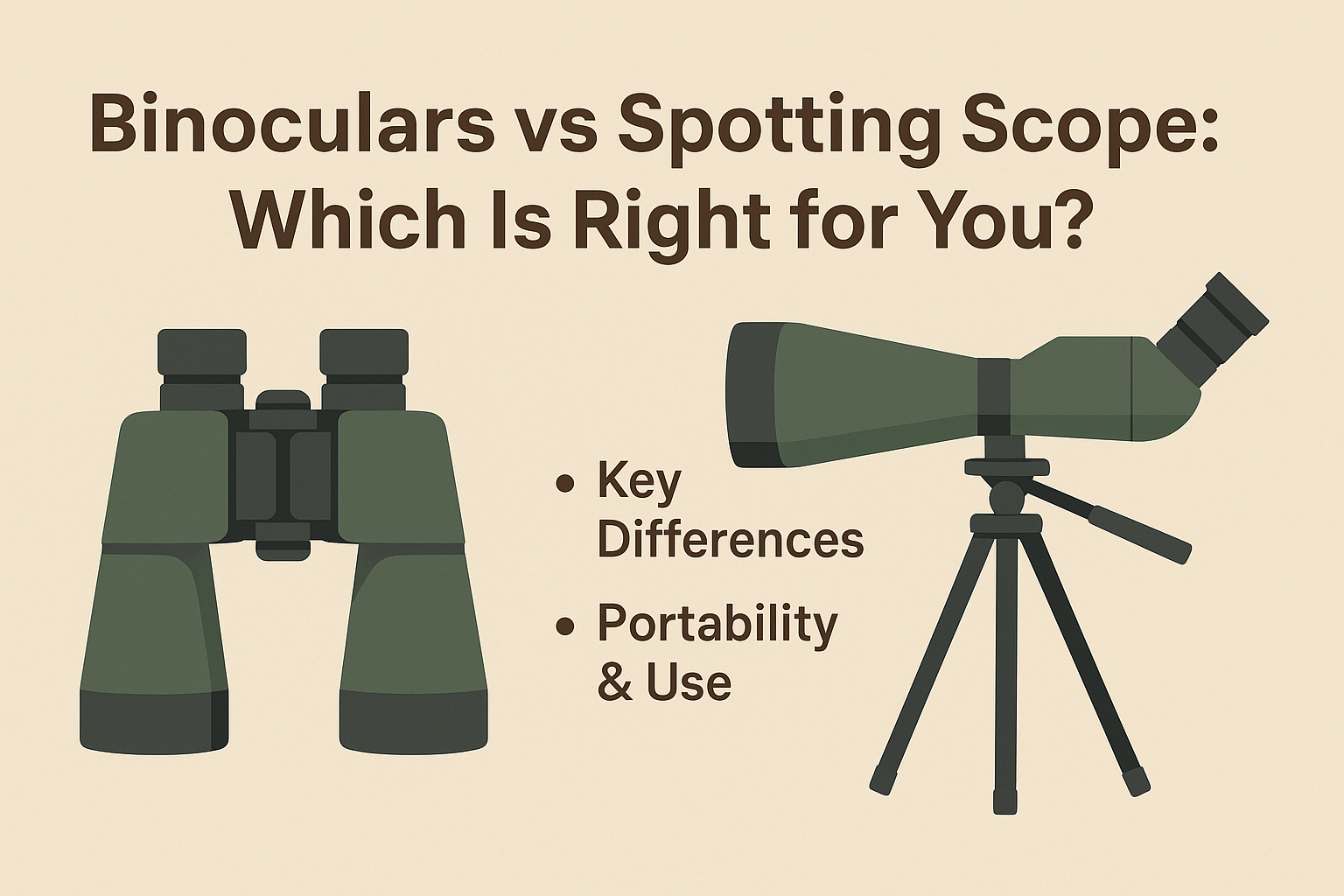
One question we’re often asked is: “What’s better, a spotting scope or binoculars?” or “Should I invest in a pair of binoculars or a spotting scope?” The truth is, these two tools serve different purposes, and the best choice depends on your specific needs. While there’s no one-size-fits-all answer, we’ll walk you through some key points to consider to help make your decision easier. But first, let’s clarify the difference between the two.
Both binoculars and spotting scopes are optical devices designed to magnify your view. However, the similarities largely end there.
- Binoculars generally offer lower magnification, usually between 6x and 10x (though higher magnifications are available). They provide a wider field of view and can typically be handheld. Because you use both eyes, extended viewing sessions are more comfortable.
- Spotting Scopes, on the other hand, often provide adjustable magnification, maxing out around 60x or 70x. While this higher magnification is ideal for long-distance observation, it comes with trade-offs: a narrower field of view, reduced brightness, and increased sensitivity to shakiness. For this reason, spotting scopes almost always require a tripod, as do binoculars with magnification above 10x. (Learn more in our Spotting Scopes 101 guide).
What's your primary use
The first question to ask yourself is: “What will I primarily use this for?” If you’ll be in dense, dark woods tracking warblers flitting through the canopy or watching for a deer during dawn or dusk, binoculars are likely your best bet. Their wider, brighter field of view performs much better in low-light conditions and makes it easier to locate and follow your subject. (See our Binoculars 101 for more on why). However, if you’re scanning a mountain range for the perfect ram or observing a flock of American Avocets feeding in the shallows from a distance, a spotting scope can offer the magnification you need for precise identification. In these scenarios, binoculars may not provide enough detail, especially at longer distances.
Portability
Another important consideration is how much gear you’re willing to carry. Binoculars are lightweight and easy to transport over long distances. A spotting scope with a tripod, however, can weigh around 4.5 kg (10 lbs), which might be more than you’re willing to lug around. That said, smaller and lighter scope-and-tripod setups are available if portability is a concern. If you need magnification beyond the typical 8x or 10x of most binoculars but don’t want the bulk of a scope, consider image-stabilized binoculars. These innovative tools, like options from Kite Optics, offer up to 20x magnification in a compact, lightweight package that can be handheld—no tripod required!
Final Thoughts
Both binoculars and spotting scopes have their strengths, and the right choice depends on your intended use and personal preferences. Consider your typical viewing environment, the level of magnification you need, and how much gear you’re willing to carry. Armed with this information, you’ll be well on your way to finding the perfect optical tool for your adventures. Once you have decided which tool is right for the task at hand, take a look at these blog posts to help you choose the right spotting scope or pair of binoculars