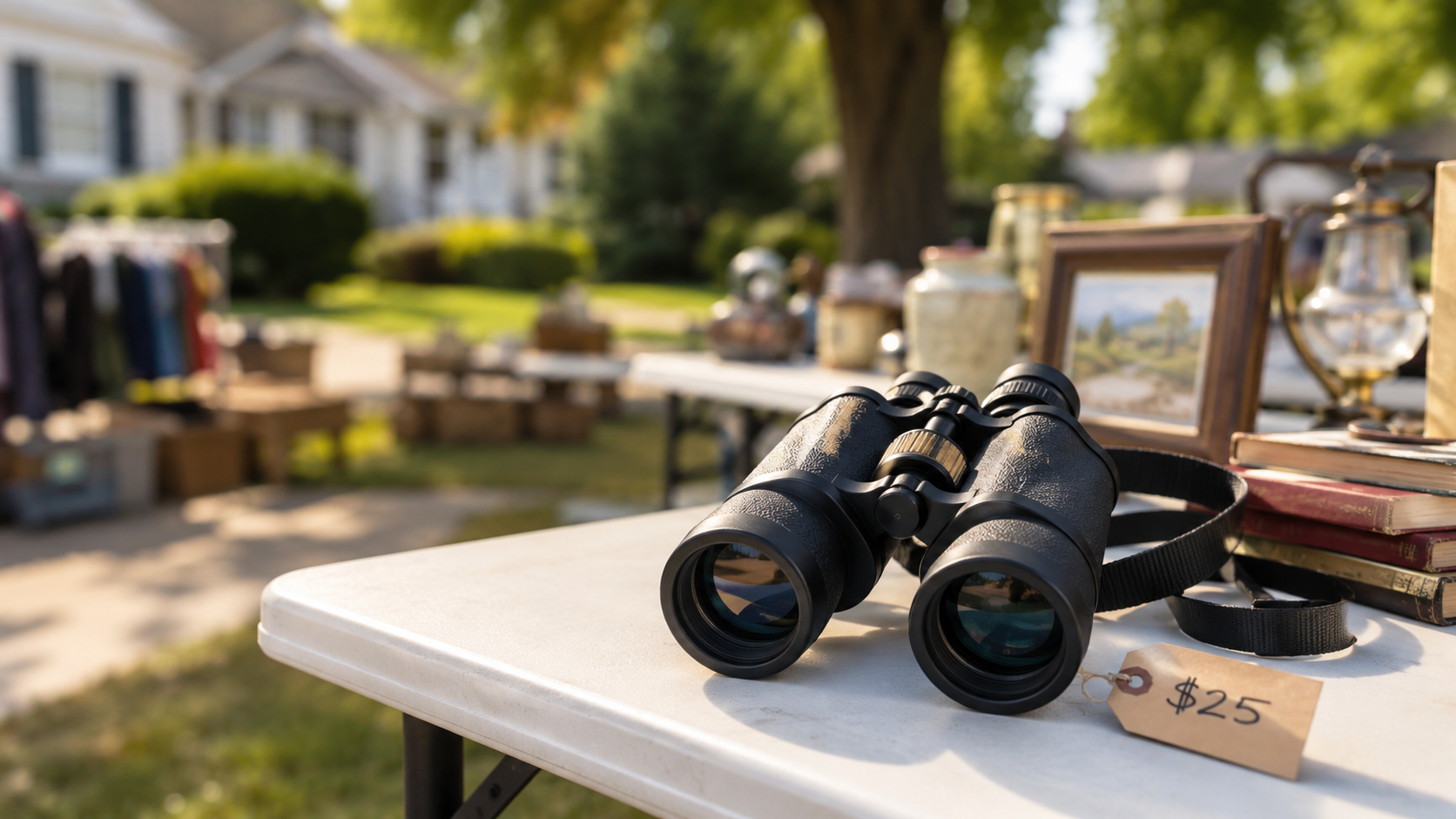
TL;DR (Too Long; Didn’t Read)
Buying used sport optics can be a smart way to save money — but it’s not without risk. Binoculars and spotting scopes are precision instruments, and damage isn’t always obvious.
If you can, stick to brands like Vortex and Athlon with no-fault lifetime warranties, and follow our checklist to spot any issues before you buy.
Used Optics: Great Deals… Sometimes
Sport optics are built to last — but only when treated well. While buying used binoculars or spotting scopes can save you a good chunk of change, it can also leave you stuck with something that’s out of alignment, damaged, or just plain frustrating to use.
Optics have a lot of moving parts. And even if they look okay on the outside, internal issues can ruin your viewing experience.
So when does it make sense?
Brands That Offer Lifetime Support
Some brands stand behind their products no matter what happens or who owns them. This makes buying used gear from them a much safer bet.
Vortex, Hawke and Athlon all offer no-fault lifetime warranties
That means if you buy a used pair and discover an issue, you can send them in for repair or replacement, no questions asked. The only cost to you is shipping one way.
Buying Other Brands? Be Cautious
If you’re looking at used optics from brands without transferable warranties, you’ll want to inspect them closely. Here's a checklist to help spot common issues.
Used Optics Inspection Checklist
Lenses
- Examine the lenses carefully under good lighting.
- Look for:
- Scratches
- Hazy spots
- Uneven colour
- Scratches
- On binoculars, check that both lenses look the same — a difference in tint or clarity could mean worn or damaged lens coatings.
Bridge Tension (Binoculars Only)
- Hold the left and right barrels and flex them, adjusting the interpupillary distance (how far apart the eyepieces are).
- Let go and see if they stay in place. If the bridge is too loose, it won’t hold alignment during use.
Eyecups
- Twist or pull out the eyecups several times.
- Make sure:
- They extend and retract smoothly
- They lock into place (if they’re supposed to)
- There’s no gritty or scratchy feeling — this could indicate sand or internal debris
- They extend and retract smoothly
Collimation (Binoculars Only)
Collimation refers to the alignment of the two optical barrels. Poor collimation can cause eye strain, headaches, or double vision — and is often expensive to repair.
Quick field test:
- Focus on a straight vertical object (like a utility pole or building edge) about 50–100 metres away.
- Keep both eyes open and note whether the image appears to line up perfectly between the two barrels.
- If the object appears doubled, offset, or causes your eyes to “work” to merge the image, the collimation is likely off. You can switch between closing your left eye and right eye to see if the object appears in the same spot on both sides.
If you suspect collimation issues, it’s usually best to pass — unless the binoculars are from a brand with a transferable lifetime warranty that covers alignment.
Diopter Adjustment
- Cover the left barrel and look through the right.
- Slowly rotate the diopter ring from one extreme to the other.
- The image should come into and out of focus smoothly.
- If unsure how to set the diopter correctly, check out our Diopter Setup Guide.
Focus Wheel
- Start by focusing on a nearby object (around 15 feet away).
- Then switch to something far away and adjust the focus slowly.
- Make sure:
- The wheel turns smoothly
- There are no skips, sticky spots, or grinding
- The change in focus feels even and consistent
- The wheel turns smoothly
Most binoculars should be able to focus from around 10 feet to infinity. If not, something might be off internally. Once you have done that, do it again only this time change the focus as quickly as possible.
Bonus Tip: Test in the Field (if possible)
If the seller allows, test the binoculars or scope outside. It’s much easier to notice clarity issues, collimation problems, or internal fogging when using them in natural light over distance.
Final Thoughts
Buying used optics isn’t for everyone — but if you’re careful, it can be a smart move. Stick with brands that back their products for life (like Vortex, Hawke and Athlon), and follow this checklist to avoid getting stuck with a lemon.
Still unsure? Give us a call or shoot us a message. We’re happy to offer honest advice, whether you're buying new, used, or just shopping around.