TL;DR
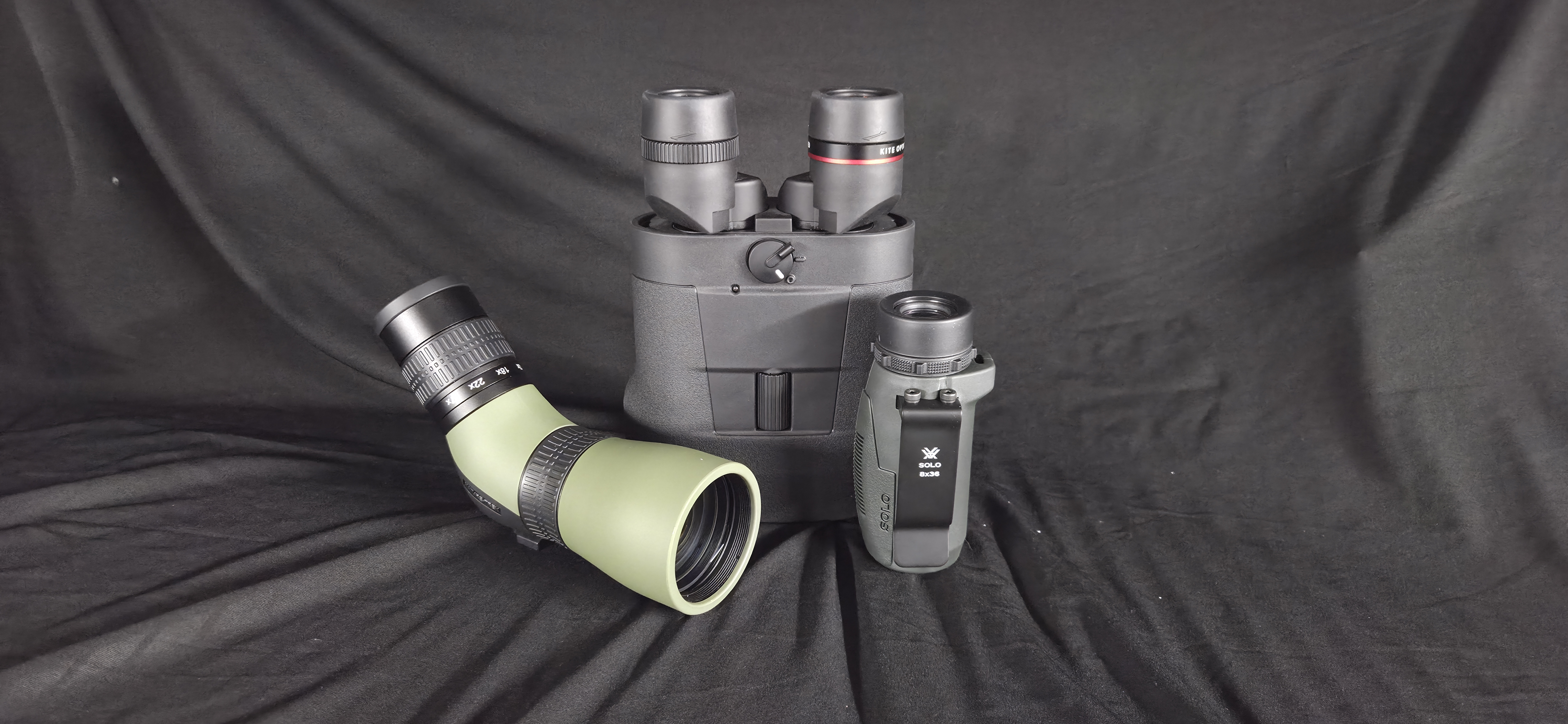
Monoculars and compact spotting scopes may look similar, but they serve different purposes. Monoculars are ultra-portable and great for quick looks, while compact spotting scopes deliver more reach and clarity—though they work best on a tripod. For those who want higher magnification without setup time, image-stabilized binoculars offer a clever middle ground.
The Quest for Portability in Birding Optics
There’s nothing quite like the view through a full-sized spotting scope. The detail, the reach, the satisfaction of bringing a distant bird into crisp focus—it’s addictive.
But there’s a catch. Large scopes and tripods can feel like hauling a small telescope through the woods. Many birders want something lighter and quicker to set up, especially for travel or long hikes.
At Pelee Wings Outfitters, one of the most common questions we hear is:
“What’s the difference between a monocular and a compact spotting scope?”
They often look similar and even share names—pocket scope, mini scope, travel scope—but they perform quite differently.
What Is a Monocular?
A monocular is essentially half a pair of binoculars—one optical barrel, usually fixed at 6x to 12x magnification. They’re designed for quick, one-handed use and spontaneous birding moments.
You might also hear them called pocket scopes, mini scopes, or handheld scopes.
Advantages of Monoculars
- Extremely compact: Small enough to fit in a jacket pocket or glove box.
- Good value: Since there’s only one lens system, you often get better optical quality for your dollar compared to binoculars.
Drawbacks of Monoculars
- Less stable: With only one point of contact, it’s harder to hold the image steady.
- Less comfortable for extended viewing: Without both eyes engaged, fatigue can set in faster.
For casual or ultralight birding, monoculars are fantastic. But if you’re hoping to study plumage detail or track distant birds, you’ll want something with more magnification and stability.
What Is a Compact Spotting Scope?
Compact or travel spotting scopes are smaller versions of traditional spotting scopes. They typically feature 15x to 40x zoom, and come in straight or angled designs.
Although some are advertised as “handholdable,” most perform best with support—such as a lightweight tripod or monopod.
You’ll sometimes see these called compact spotters, travel scopes, or mini spotters.
Advantages of Compact Spotting Scopes
- Lightweight and portable: Many models weigh around a kilogram or less.
- Simpler setup: You can use a small tripod, monopod or trekking pole with a tripod mount, no heavy gear required.
- More reach: Even a 30x zoom lets you see details an 8x binocular can’t reveal.
Drawbacks of Compact Spotting Scopes
- Less light at high magnification: Smaller lenses (usually 50–60mm) gather less light than full-size scopes.
- Reduced performance in low light: Dusk or dawn birding can be challenging.
- Limited extreme reach: Compact scopes top out around 40x, while full-size models can push beyond 60x.
Still, technology has closed the gap dramatically. High-end Kowa and Swarovski compact scopes deliver impressive clarity even under dim conditions—often outperforming larger entry-level scopes.
Can a Compact Spotter Replace a Full-Sized Scope?
The answer depends on how you bird.
If you’re often scanning distant horizons or birding at dawn and dusk, nothing beats a full-sized 80–95mm spotting scope for light and detail.
But for many birders, the trade-off in portability is worth it. Compact scopes offer a comfortable middle ground—enough magnification to see fine details, without needing to haul a full tripod setup.
After all, The best scope is the one you actually bring with you.
The Wild Card: Image-Stabilized Binoculars
Somewhere between binoculars and spotting scopes lies one of the most exciting innovations in optics—image-stabilized binoculars (IS binoculars).
These use gyroscopic or electronic systems to counteract hand shake, letting you hold 10x–18x binoculars steady—something nearly impossible without stabilization.
Why Birders Love Them
- Instant readiness: No tripod, no setup time. Just raise and view.
- Higher usable magnification: Rather than limiting yourself to 8x or 10x, you can hold binoculars with much higher magnification steady without shake and blur.
- True portability: Similar in size and weight to standard binoculars.
Some spotting scopes now include stabilization up to 45x, offering a truly handheld high-power option.
IS binoculars do have trade-offs—they require batteries, and can’t match the extreme zoom or low-light performance of a full-sized scope. But for birders who value spontaneity and freedom from gear, they’re a game-changer.
Final Thoughts
Each tool has its own strengths:
- Monoculars: Best for casual birding and minimal pack weight.
- Compact spotting scopes: Great for travel and mobile birders wanting real reach.
- Image-stabilized binoculars: Perfect for high-magnification viewing without setup time.
Choosing between them isn’t about what’s “best”—it’s about how you bird. Whether you’re scanning from a Point Pelee boardwalk, hiking remote trails, or birding between flights, the right optic is the one that helps you see more, more easily.
And that, ultimately, is what keeps us all hooked on birding—the thrill of discovery, one focused view at a time.