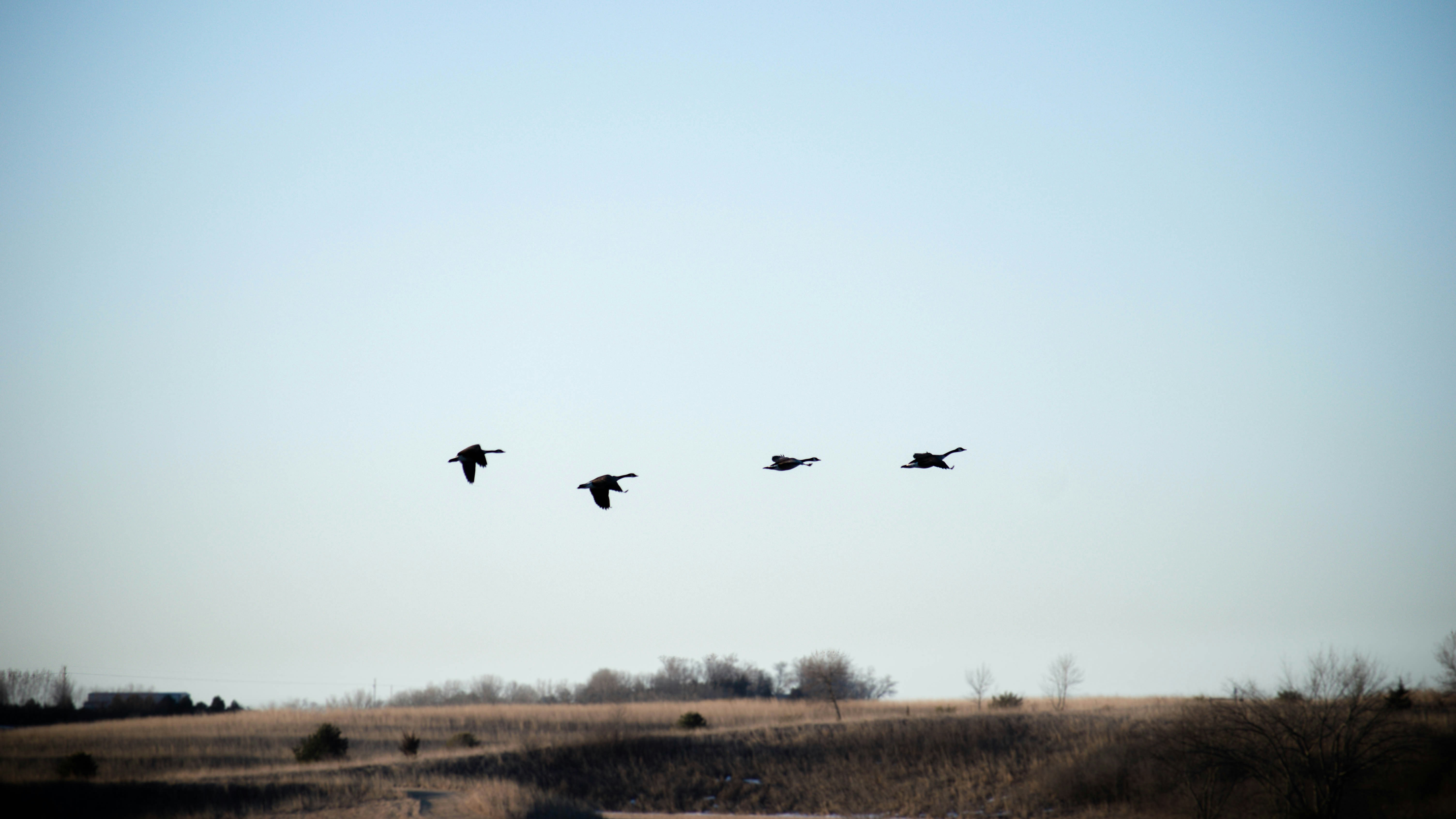
It’s that time of year again — fall migration is ramping up!
Raptors are soaring through by the thousands, warblers are testing our ID skills with some of the trickiest looks of the year, and Monarch butterflies are turning trees into glowing fields of orange during their nightly roosts. It’s a spectacular time to be outside — and possibly the perfect time to upgrade your binoculars or spotting scope.
I’m not going to walk you through everything to consider when comparing optics in this post (we’ve already covered that in detail in our other blogs on choosing binoculars and buying a spotting scope).
Instead, this blog is here to highlight a few specific models — and more importantly, the features that make them especially well-suited for fall migration. Because what works brilliantly for watching distant hawks might not be ideal for warblers or butterflies. Let’s break it down:
🦅 Hawk Watch – Long-Distance Raptors
Raptor watching often means scanning the skies for birds soaring on thermals over cliff faces or kettling high above open fields. In these situations, 8x binoculars might not cut it.
- Higher magnification binoculars or a spotting scope (angled eyepieces make looking up much easier) will give you the reach and clarity you need for distant raptors.
- If you’re not a fan of being tethered to a tripod, a pair of high-power binoculars with image stabilization will help you track birds on the move — and dash to a better vantage point without the tripod slowing you down.
- Look for larger objective lenses (like 50mm+) to help maintain brightness at those higher magnifications.
Our Top Picks for Hawk Watching:
- Kite APC Image Stabilized Binoculars (look for the newer versions with 2.0 stabilization and ED glass)
- Vortex Diamondback HD 12x50
- Zeiss SFL 12x50
- Swarovski NL Pure 14x52
- Athlon Talos 20–60x80
- Athlon Ares G2 20–60x80
- Kowa TSN-88A
🐦 Warblers & Songbirds – Fast Movers in Tight Spaces
These birds are usually much closer and a lot faster, often flitting around in dense cover with poor lighting. That means:
- Lower magnification (6.5x–8x) gives you a wider field of view, helping you find and follow fast-moving birds more easily.
- High-quality glass will help you pick up subtle markings and colours — crucial for warbler ID.
Our Top Picks for Fall Warblers & Songbirds:
- Athlon Neos 8x42
- Athlon Argos UHD 8x42
- Kowa BDII-XD 6.5x32
- Kowa BDII-XD 8x42
- Zeiss SFL 8x40
- Zeiss Victory SF 8x42
🦋 Butterflies – Slow Subjects, Close-Up Viewing
Butterflies are typically slower moving and let you get much closer than birds. For them:
- A short close-focus distance is key.
- Keep it lightweight and compact — it makes a difference when you're covering lots of ground in search of that rare Monarch or hairstreak.
Our Top Picks for Monarchs & Other Butterflies:
- Pentax Papilio 6.5x21 (hard to beat for close-focus fun)
- Vortex Diamondback HD 8x32
- Kowa BDII-XD 8x32
- Kite Lynx 8x30
- Zeiss SFL 8x30
One Final Tip (If You Haven’t Read Our Other Blogs)
The single best thing you can do when buying new optics? Try them.
Every set of binoculars feels a little different — in balance, ergonomics, and clarity. What looks perfect on paper might not feel quite right in your hands or on your eyes. So if you can, visit a shop (like ours!) and test a few out before making your final decision.