TLDR
We compared an entry-level spotting scope and a premium spotting scope under identical conditions to show how glass quality and magnification affect brightness, resolution, field of view, and chromatic aberration. Higher-end optics handle increased magnification and low light far better—but even mid-range glass can perform impressively in real-world use.
Two things affect your view more than almost anything else: glass quality and magnification. To show what these differences actually look like in the real world, we ran a small experiment.
For this comparison, we photographed through two spotting scopes: a Vortex Crossfire HD 20–60×80 mm as our entry-level example, and a Swarovski ATS-80 with a 20–60× eyepiece as our “alpha-grade” benchmark. We chose these two because they share the same objective diameter and magnification range, reducing variables.
Both scopes were mounted on a Sirui ST-224 tripod with a VH-10 head. To minimize lighting inconsistencies, we marked the floor to ensure the tripods returned to the exact same position, and we carefully centered each scope on the subject.
We ran two tests.
The first was indoors, with dimmed showroom lighting, photographing a Lincoln Sparrow at 10 m. This reveals how brightness and clarity change in low light—both when moving from entry-level to premium glass and when increasing magnification.
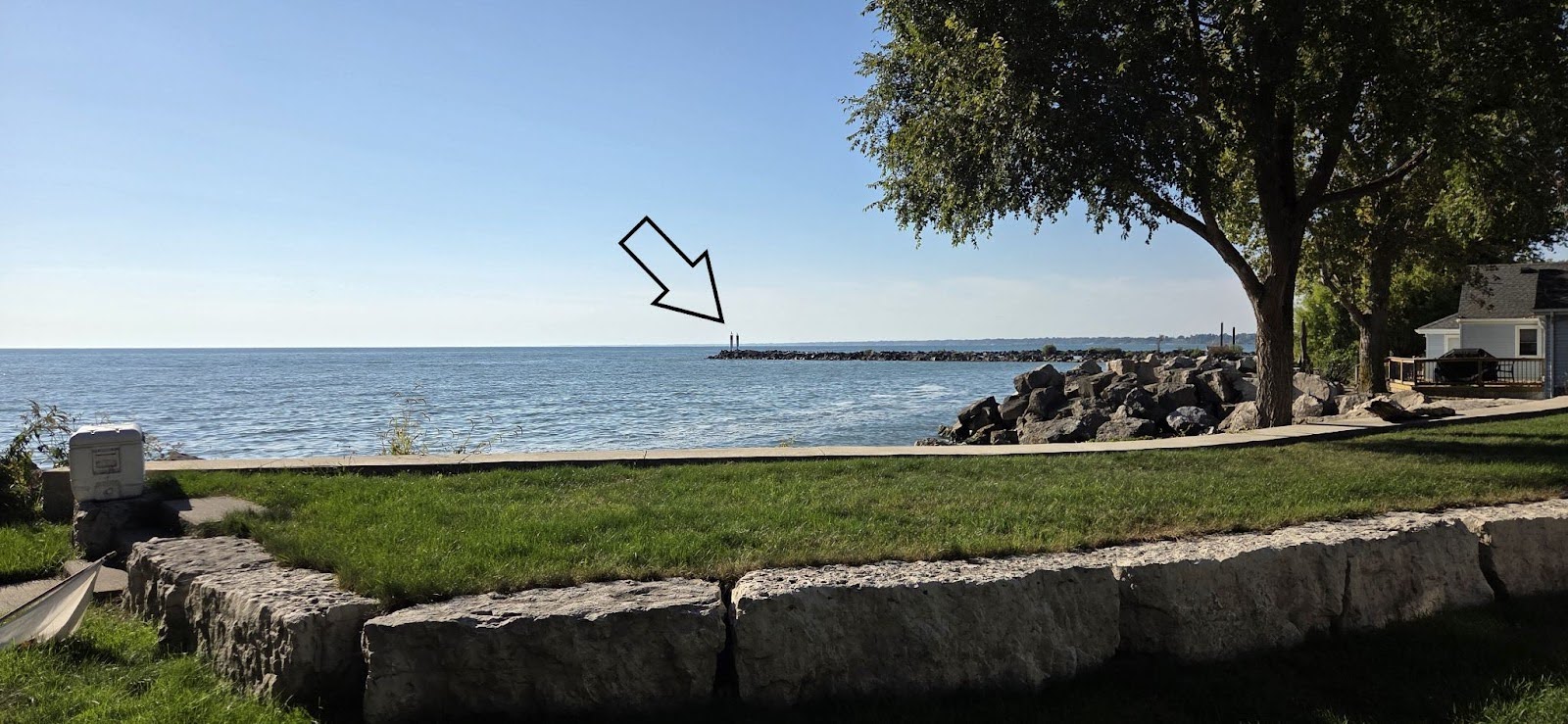
The second test looked at field of view, clarity, and chromatic aberration. For this series, we used a pair of lighthouses (and occasionally some cooperative Double-crested Cormorants) roughly 300 m away.
All photos were taken through a Samsung Galaxy S25 mounted with a Kite smartphone adapter. Low-light shots used 1/15 s, ISO 500, F1.8. Field-of-view shots used 1/1000 s, ISO 50, F1.8.
Test One
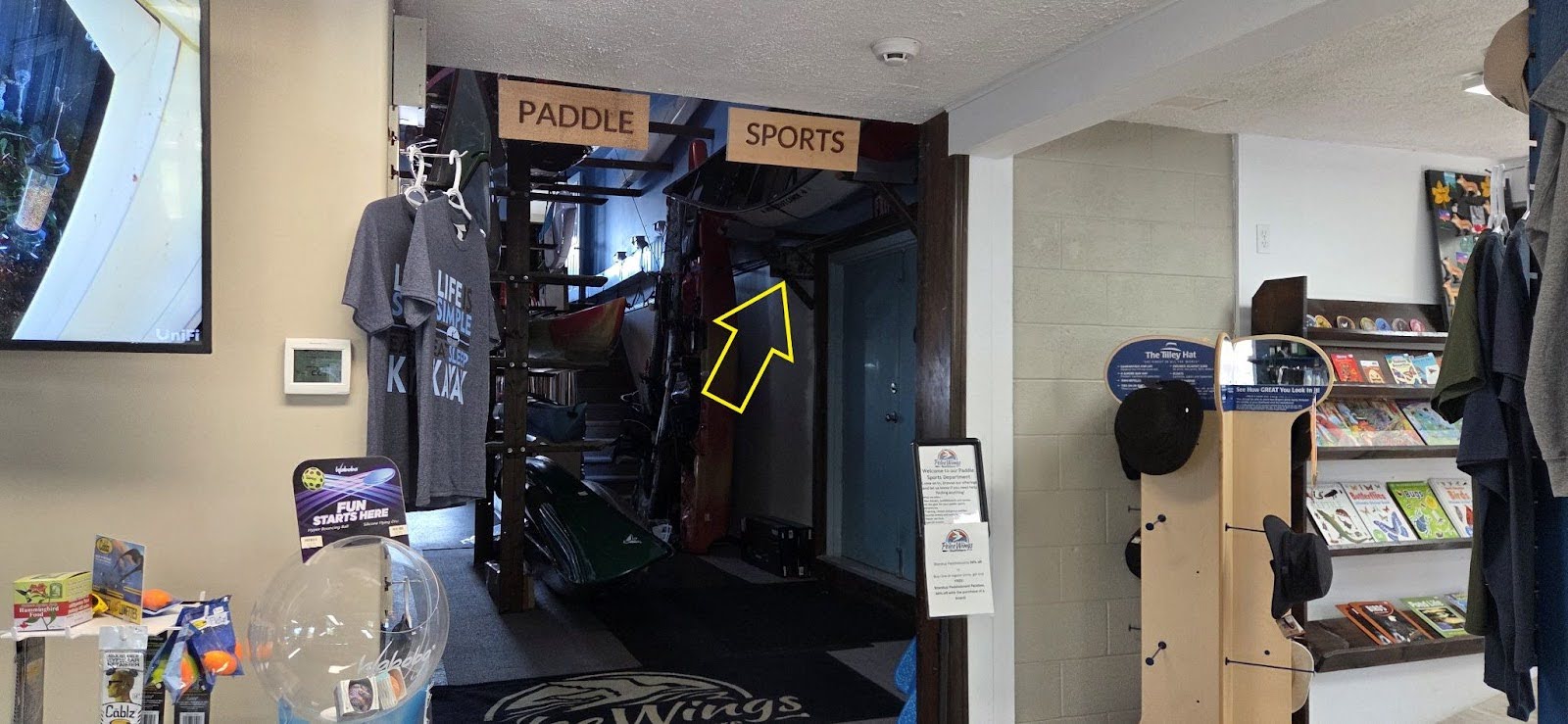
For this demonstration, I used a beautiful photo of a Lincoln sparrow that we have set up in a dark corner of our store for customers to use while comparing optics in our store. Check out this sweet setup!
When looking at the first two images, a couple of things stand out. First, a correction: the bottom half of the top image was taken at 60×, not 20× as labelled.
Second, increasing magnification reduces resolution—sometimes dramatically. Through the Crossfire, feather markings that looked reasonably sharp at low power became blotchy and undefined at high power. Colour contrast also suffered, making it harder to distinguish transitions between tones. We also noticed reflections caused by the store lighting, which could just as easily have been caused by sunlight outdoors.
The Swarovski also showed a decrease in resolution at higher magnification, but nowhere near the same extent as the Crossfire.
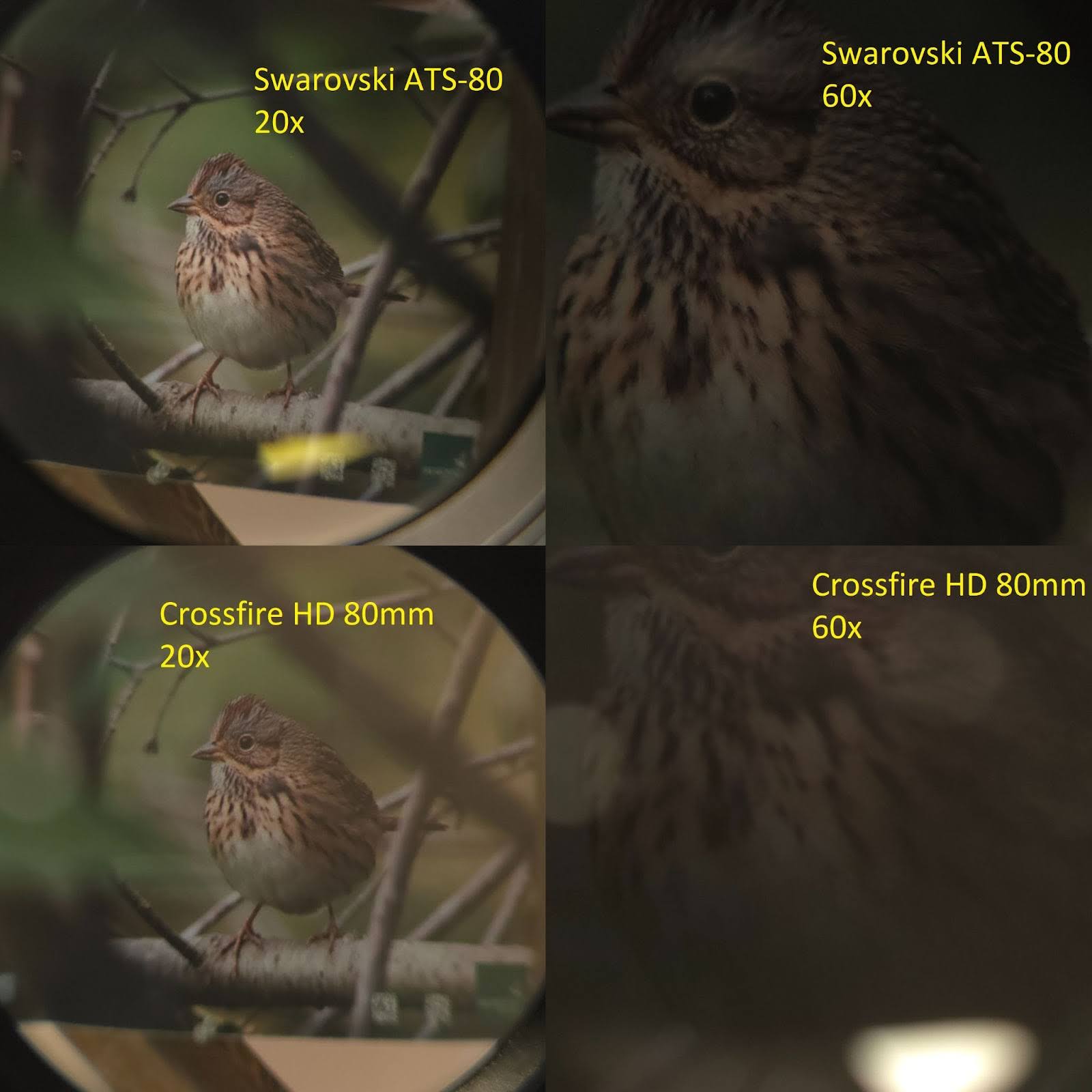
When comparing the two scopes at low magnification, the Swarovski is clearly sharper, brighter, and shows stronger colour contrast than the Crossfire. These differences become even more pronounced at high magnification.
Regarding reflections, the Swarovski showed a small amount at 20×, but it disappeared entirely at higher powers. As a side note, all reflections disappeared when using Swarovski’s VPA 2 adapter, likely because it does a better job shielding the eyepiece from ambient light.
Test Two
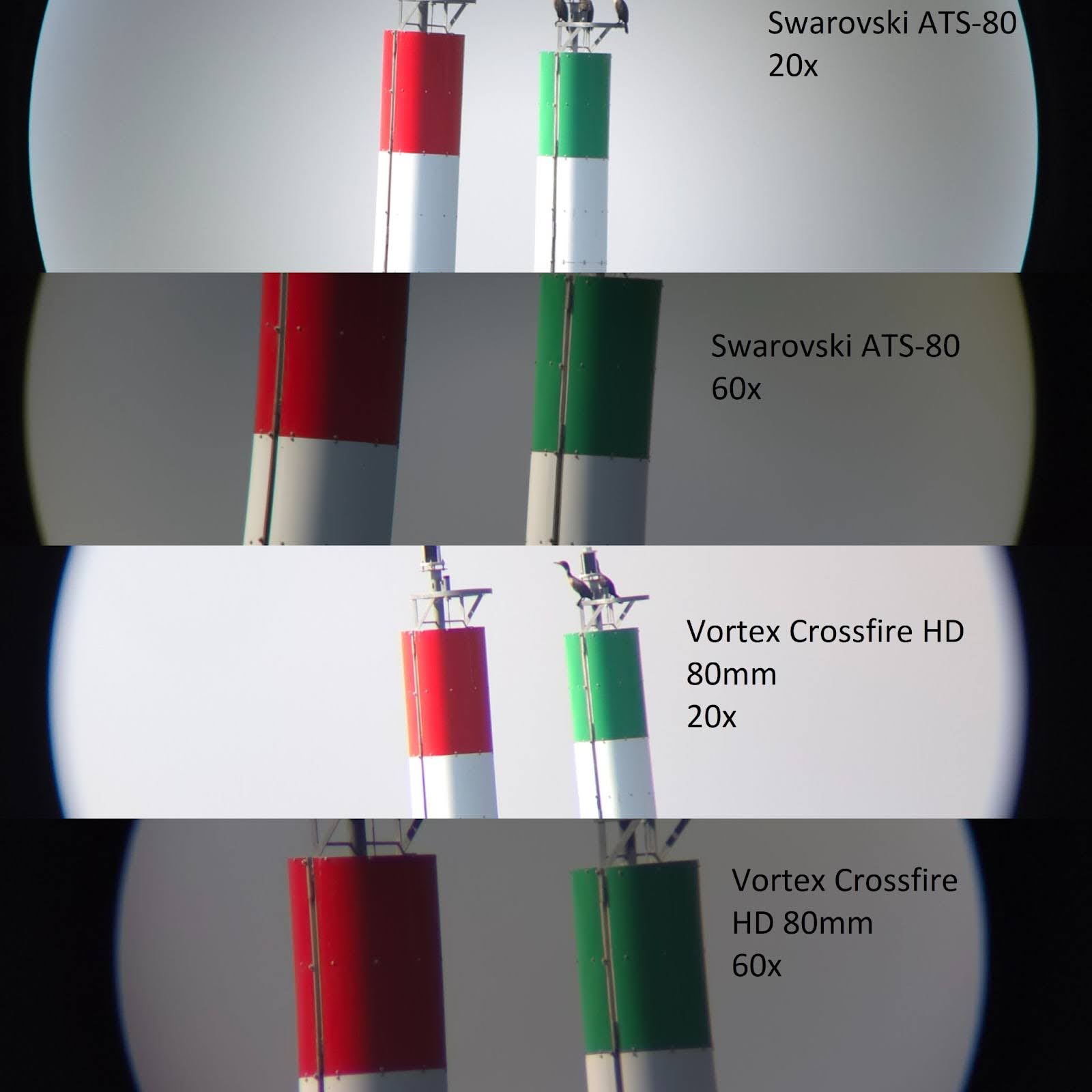
In the second test, our goals were to show differences in field of view, overall clarity, and chromatic aberration—the coloured halo you can see around high-contrast edges. We compared low and high magnification on both entry-level and top-tier glass.
To demonstrate field of view, I took a few minutes away from the desk to venture outside and set up both scopes on the lighthouses just off shore from our store. (This view is tough to handle)
In the second test, our goals were to show differences in field of view, overall clarity, and chromatic aberration—the coloured halo you can see around high-contrast edges. We compared low and high magnification on both entry-level and top-tier glass.
The images below—one from the Crossfire HD 20–60×80 mm and one from the Swarovski ATS-80—highlight several points. As with any optic, increasing magnification narrows your field of view, darkens the image, and reduces resolution.
The first set of images also shows chromatic aberration. Look at the right-hand edges of the lighthouses, the metal framework at the top, and the cormorants. You’ll see a purple fringe or halo, sometimes mixed with yellow.
The amount of chromatic aberration depends heavily on the type of glass. ED glass, fluorite crystals, and APO elements are specifically designed to reduce this effect.
In the third image set—comparing both scopes at low and high power—you’ll notice that while both lose field of view, brightness, and resolution as magnification increases, the Swarovski maintains all three far better thanks to its superior glass.
Final Thoughts
First: Don’t get overly focused on maximum magnification. With real field use, you’ll find that you rarely need the top end of your zoom range. Every scope, regardless of price or glass quality, sees a sharper drop in performance in the last 10–15 percent of its magnification.
Second: While high-end optics unquestionably offer the best view, you don’t need to remortgage your house to enjoy nature. Today’s mid-range binoculars and spotting scopes use excellent glass, capable coatings, and smart optical design, delivering sharp, bright views that serve most users exceptionally well. Premium gear can elevate the experience—but the real magic comes from being out there, curious, engaged, and using the tools you have with intention.