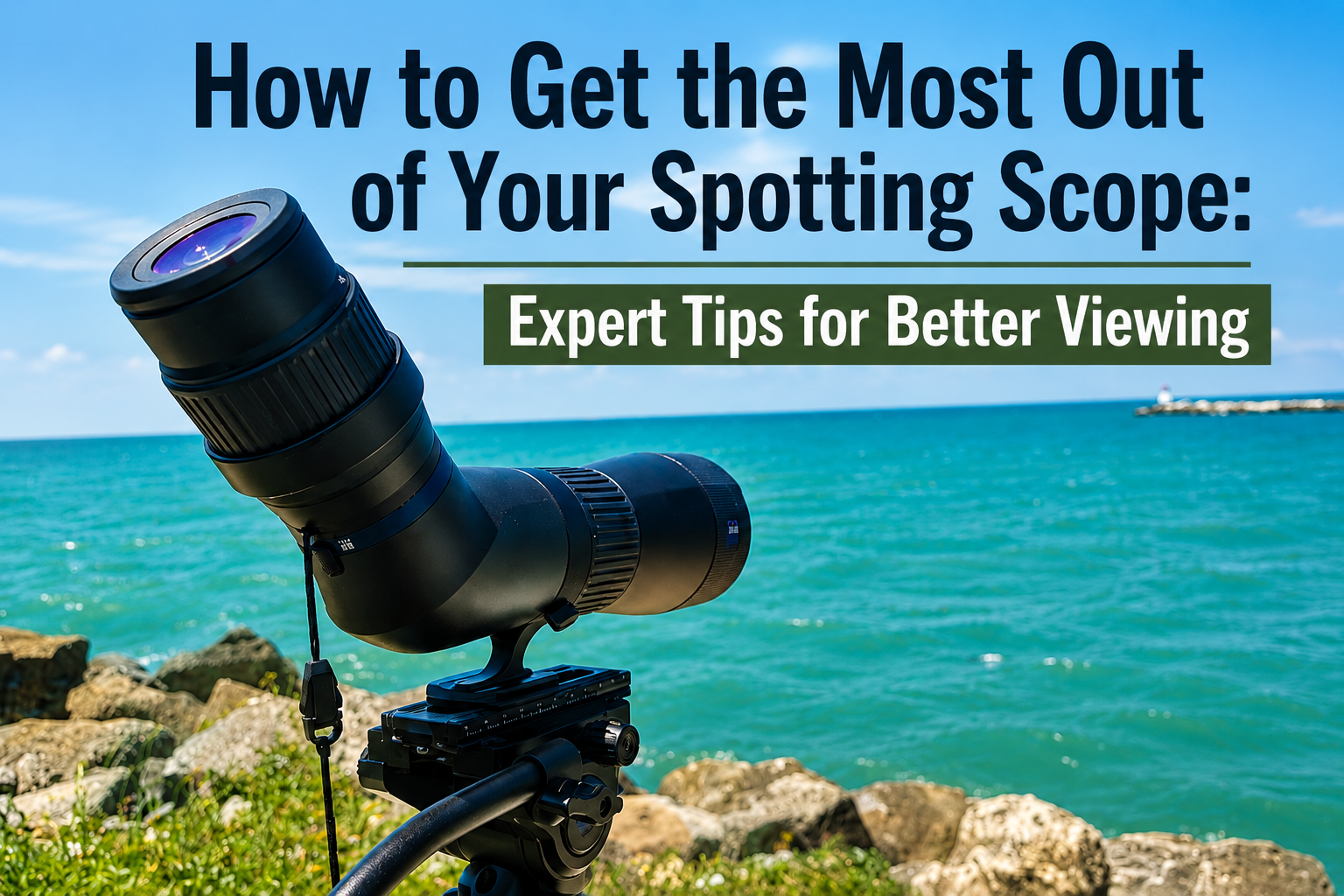
How to Get the Most Out of Your Spotting Scope
A spotting scope opens up the landscape in ways that feel almost unfair. Whether you're glassing a distant ridge for elk movement or sorting through a mixed flock of shorebirds, the right techniques make the view sharper, steadier, and far more rewarding. A scope is a precision tool—treat it like one, and it pays you back in detail. While there aren’t near as many steps to tune your scope as with binoculars, these tips will certainly help you get the most out of your scope! Did you miss that blog? Check it out here!
Keep Your Scope Clean
Dust, grit, and fingerprints steal clarity long before you notice the image getting soft. A quick field-clean keeps everything performing the way the manufacturer intended. Start with a blower or soft brush to remove debris, then use a microfiber cloth and cleaning solution to finish the job when conditions get messy.
For a full step-by-step, see our optics-care guide.
Use the Lens Hood in Wet Weather
The lens hood isn’t just useful for when the sun’s rays cause uncomfortable glare. When rain, snow, or sea spray drift across your view, extend the lens hood. It keeps droplets off the objective lens and cuts glare, giving you better contrast.
Find the Subject Efficiently
Spotting scopes are powerful, but that power comes with a narrow field of view. Working smart makes the difference between frustration and smooth tracking.
Begin with low magnification. The wider field helps you lock onto a duck moving through the marsh or an animal slipping along a treeline. Once you’ve centered your subject, increase magnification only as conditions allow—heat shimmer, haze, and wind shaking your scope can undo the benefit of high power.
Your brain is trained to skip details when reading left to right (it helps you read faster). Try scanning from right to left with your scope. It naturally slows the eye and brain just enough to catch subtle movement, whether it’s wings flicking in the brush or antlers poking above tall grass.
Choose a Solid Tripod
Stability is everything. A suitable tripod improves resolution, removes vibration, and keeps your view steady at higher magnifications. For help picking the right one, see our tripod buying guide.
Bonus tip, when the wind picks up, hang a backpack or weight from the tripod’s center support with a bungee cord. That little bit of downward pressure can transform a twitchy setup into one that feels nailed to the earth.
Use the Versatility of an Angled Scope
If you’re using a scope with an angled eyepiece and a tall enough tripod, spin the eyepiece to the side when you need extra height. This lets you raise your viewing angle without extending the tripod legs—perfect for looking over prairie grass, cattails, or a patch of sagebrush, and equally handy on busy viewing platforms during peak migration.
No matter what you’re glassing—feathers, antlers, or the distant shape you need to identify—a few thoughtful habits make a spotting scope far more enjoyable and effective. As your technique sharpens, the scope becomes less a piece of gear and more a natural extension of how you explore the landscape.