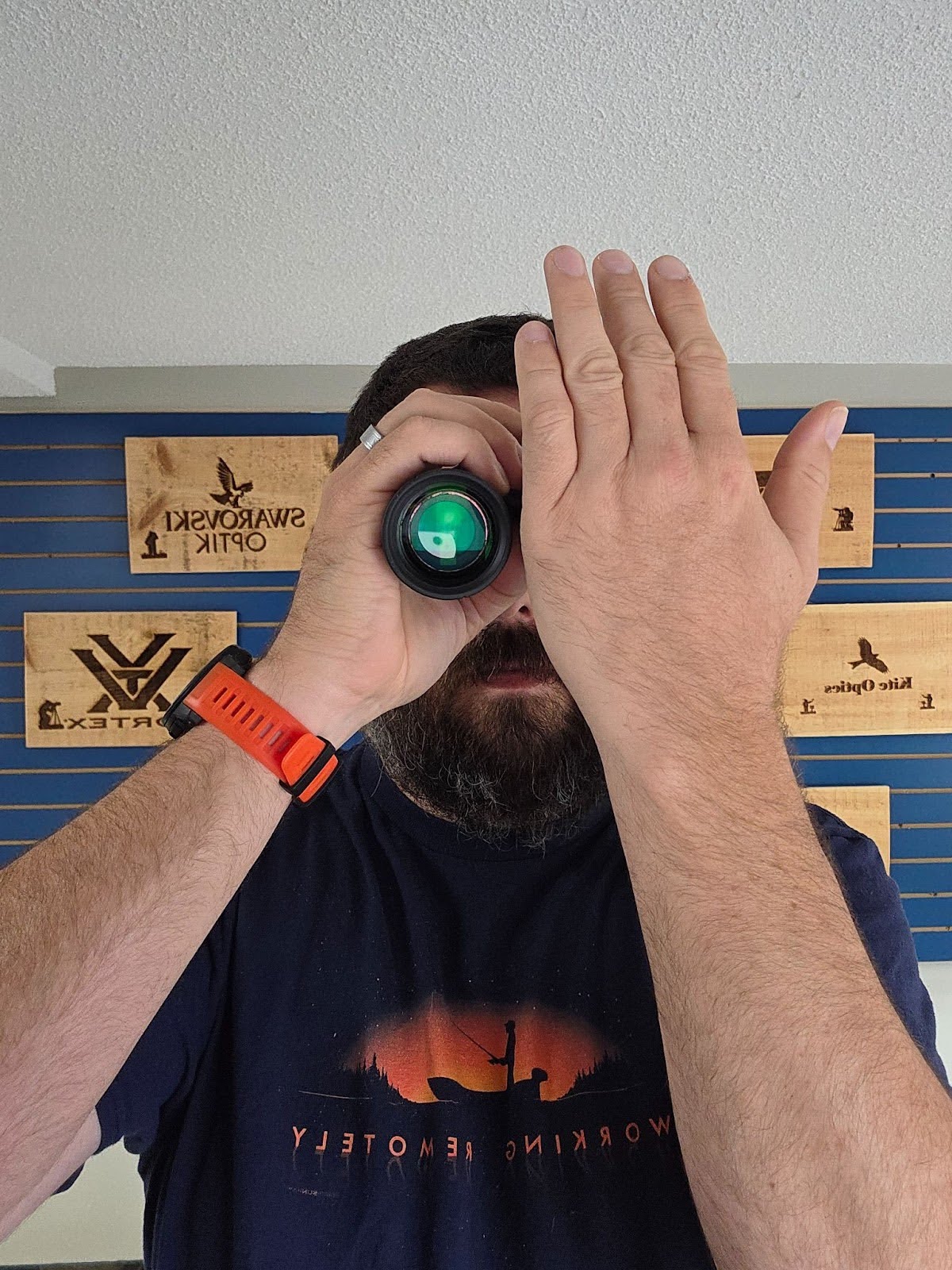
Binoculars fresh out of the box aren’t quite ready to give you their best view. Just like a pair of shoes, they need a little adjustment to fit you. Taking five minutes to set up your binoculars properly makes the difference between frustration and that “wow” moment when everything clicks into crisp focus. Let’s walk through the three key adjustments: eyecups, interpupillary distance, and the diopter.
TL;DR (Too Long; Didn’t Read)
Twist, pivot, dial - three tiny tweaks that make a huge difference. Adjust your eyecups for comfort, set your interpupillary distance so both eyes see one perfect image, and fine-tune the diopter to match your eyes. Do this, and your binoculars will finally feel like they were made just for you.
Step 1: Adjust the Eyecups
Eyecups are the rubber or twist-up rings around the lenses where you place your eyes. Their job is to position your eyes at the right distance from the glass so you see the full image without black shadows around the edges (called “vignetting”).
- If you wear glasses: Keep the eyecups fully twisted down. Your glasses already set your eyes back, so pushing the eyecups down prevents wasted space and dark circles in your view.
- If you don’t wear glasses: Twist the eyecups up. This keeps your eyes at the proper distance and helps block stray light from sneaking in from the sides.
Tip: Eyecups usually have multiple click stops, so feel free to experiment. Sometimes a middle setting gives the most comfortable view, depending on your face shape.
Step 2: Set the Interpupillary Distance (IPD)
Not everyone’s eyes are the same distance apart. If the barrels of your binoculars are too close together or too far apart, you’ll see two overlapping images instead of one seamless picture.
To fix this:
- Hold the binoculars up to your eyes and slowly pivot the barrels inward or outward.
- Stop when the two circles of light merge into one clean circle.
- That’s your interpupillary distance, set it once, and you’re good to go.
It may feel subtle, but nailing the IPD is key to comfortable, strain-free viewing. The good news is that as you spend more time with your binoculars, you will find that setting your IPD will become a habit and you will do it automatically every time you pick up your bins!
Step 3: Dial in the Diopter
Here’s the part most people skip, and it’s why their binoculars never feel perfectly sharp. The diopter adjustment compensates for differences between your left and right eyes. It has the most steps, but once you have it set you won’t have to adjust it unless your prescription changes or someone accidently moves it! Most binoculars put the diopter on the right eyepiece (sometimes it’s a ring near the focus wheel). Here’s how to set it:
Tip: Do this in bright daylight for the clearest results.
- Cover the right objective lens (the front of the binocular).
- Look through the left side and focus on a distant object using the main focus wheel. Get it tack sharp.
- Uncover the right side and cover the left side. Don’t touch the main focus wheel. Instead, use the diopter ring to bring the right image into sharp focus.
- Uncover both sides—now the view should be perfectly crisp for both.
Once it’s set, leave the diopter alone! From now on, just use the main focus wheel for regular adjustments.
The Payoff
Eyecups, IPD, and diopter, these three little tweaks unlock the true potential of your binoculars. Once adjusted, your optics will feel natural and effortless, letting you focus on the details of a warbler in the canopy or a distant buck in the treeline instead of fiddling with your gear. Take the time to set your binoculars up right, and you’ll see more, strain less, and enjoy every outing just a little bit more.